- PBM rebates are manufacturer payments that may be shared with health plans based on the terms of the PBM contract.
- Rebate guarantees promise an agreed amount, while full pass-through credits eligible actual rebates received to the plan.
- Contract terms determine which manufacturer payments are included, how rebates are calculated, and when credits are made.
- Self-funded employers should compare guaranteed and actual rebates and review reports to check how payments are handled.
Prescription drug rebates are payments that pharmaceutical manufacturers make to pharmacy benefit managers (PBMs) under agreements involving covered medications. These payments may depend on formulary placement, prescription volume, and other contract terms. However, the amount a manufacturer pays does not always match the amount a health plan receives. The difference depends on the agreement between the PBM and the plan sponsor. Some contracts use rebate guarantees, while others require the PBM to pass through the actual rebates it receives. Understanding PBM rebate pass-through helps self-funded employers see how these arrangements work and where their rebate dollars go. It also helps them review the terms that determine how rebates are calculated, reported, and credited to their plans.
How PBM Rebates Move From Drug Manufacturers to Health Plans
To understand where rebates go, it helps to look at how they are generated and paid. Manufacturers negotiate with PBMs to secure preferred placement for their medications on a health plan's formulary. When members fill prescriptions for eligible drugs, the agreement may generate rebate payments. The PBM then handles these payments according to its contract with the health plan. Rebate reporting also helps employers understand whether any rebate retention occurs before payments are credited to the health plan.
- Manufacturer Rebate Agreements: Drug manufacturers may offer rebates to PBMs in exchange for preferred formulary placement or based on other agreed conditions. These agreements set out how payments are calculated.
- Formulary Placement and Prescription Use: A drug's position on the formulary and the number of prescriptions filled can affect the rebates available under a manufacturer agreement.
- Rebate Payments to PBMs: Manufacturers generally pay rebates after prescriptions have been filled and the required information has been processed. These payments may not arrive at the same time as the original prescription claims.
- Rebate Reporting and Reconciliation: PBMs collect and calculate rebate information before reporting amounts under the terms of their agreements with health plans.
- Credits to the Health Plan: The PBM contract determines how much of the rebate is credited to the plan, whether payments are subject to deductions, and when the credits are made.
Rebate Guarantees vs. Full PBM Rebate Pass-Through
A rebate guarantee and full pass-through are two different ways to structure rebate payments. A guarantee sets an agreed rebate amount, while PBM rebate pass-through refers to passing the actual rebates received to the health plan as defined in the contract. Understanding the difference helps employers know what their PBM has agreed to pay and what happens when actual rebates change. Under some contract arrangements, the difference between guaranteed rebates and actual rebates received may create opportunities for rebate retention by the PBM.
- What Is a Rebate Guarantee: A rebate guarantee is a minimum amount the PBM agrees to provide to the plan under specified contract conditions. It may be calculated per prescription, per member, or using another agreed measure.
- How Rebate Guarantees Work: The PBM compares the guaranteed amount with the rebate results calculated for the contract period. The agreement explains how this comparison is made and whether adjustments apply.
- What Is Full Rebate Pass-Through: Under a full pass-through arrangement, the PBM credits the plan with the actual rebates it receives that fall within the contract's definition of eligible rebates.
- Key Differences Between the Two Models: A guarantee focuses on an agreed payment level, while full pass-through focuses on the actual eligible rebates received. Their reporting and payment terms may also differ.
- When Actual Rebates Differ From the Guarantee: If actual rebates exceed or fall below the guaranteed amount, the contract determines how the difference is handled. Some agreements require additional payments or reconciliation, while others may allow the PBM to retain amounts above the guarantee.
What PBM Contract Terms Determine Where Rebates Go?
The words "rebate guarantee" and "full pass-through" do not explain every detail of a PBM agreement. Employers need to review how the contract defines rebates, which payments are included, and how the amounts are reported. Clear terms help plan sponsors understand what they should receive and what they can verify.
- Definition of Rebates: Check which manufacturer payments count as rebates. Some agreements may include traditional rebates but treat other manufacturer payments separately.
- Included and Excluded Payments: Review whether administrative fees, market-share payments, formulary fees, or other manufacturer payments are included in the pass-through calculation or excluded.
- Rebate Calculation Terms: Understand whether payments are based on actual amounts received, guaranteed amounts, prescription volume, or other agreed measures.
- Payment and Reconciliation Timelines: Check how often rebate amounts are calculated, when reports are provided, and when credits reach the health plan.
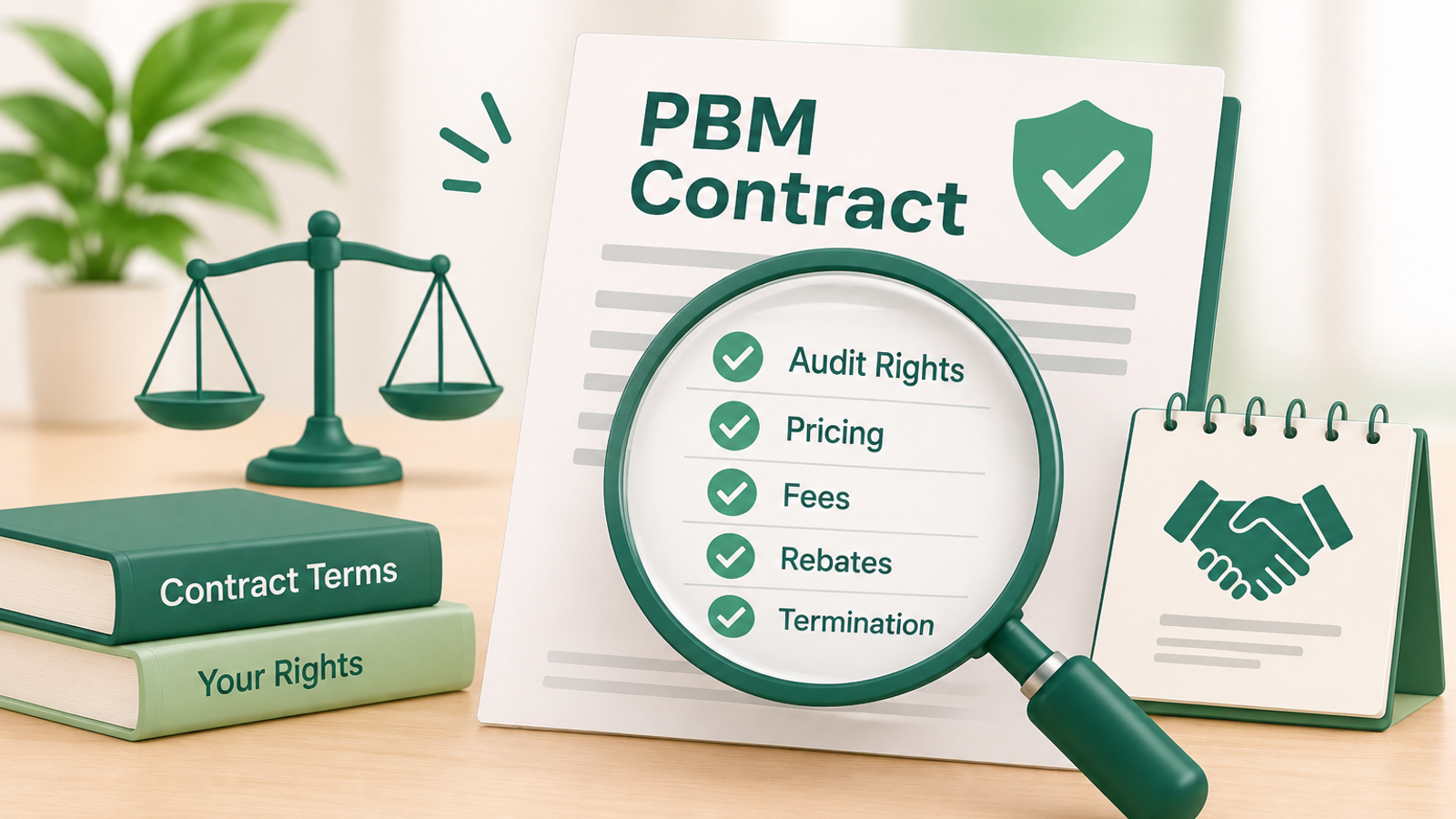
- Audit and Reporting Rights: Review whether the plan can access supporting records and verify the amounts reported by the PBM.
Employers can use a PBM audit checklist to review important contract terms and understand what information may be available for an audit.
How Self-Funded Employers Can Evaluate PBM Rebate Arrangements
Self-funded employers should look at more than the rebate amount shown in a report. They also need to understand how rebates relate to prescription costs, coverage decisions, and the PBM's overall compensation. Reviewing these details can help employers assess whether the arrangement is clear and consistent with their contract. Reviewing actual rebate reports alongside contract terms can help employers identify potential rebate retention and verify how rebate dollars are allocated.
- Compare Guaranteed and Actual Rebate Amounts: Check the guaranteed amount against the reported rebate results and review how any differences are handled.
- Request Plan-Specific Rebate Reports: Ask for reports showing rebate amounts, the period covered, and the calculations used to determine the plan's credit.
- Check Rebate Credits: Confirm when rebates are credited and whether the amounts in plan records match the PBM's reports.
- Review Formulary Decisions and Drug Costs: Consider the total cost of medications, coverage requirements, and available alternatives rather than comparing rebate amounts alone.
- Understand the PBM's Revenue Model: Review administrative fees, manufacturer payments, and other forms of compensation to understand how the PBM earns revenue.
A clear PBM rebate pass-through arrangement should explain which payments are included and how they reach the plan. Employers can also review PBM pricing to understand how administrative fees and other pricing terms fit into the overall agreement.
Conclusion
Knowing where rebate dollars go starts with understanding the PBM contract. Rebate guarantees and full pass-through arrangements handle payments differently, so employers should check how actual rebates are calculated, reported, and credited. PBM rebate pass-through can give plan sponsors a clearer view of the rebates their plans receive when the agreement clearly defines the payments involved. Kanurra uses a transparent rebate model in which the manufacturer rebates it receives are credited back to the plan. Employers can review Kanurra's PBM rebate approach to understand how rebate reporting and credits work. Kanurra also provides a self-funded PBM model with a focus on transparent pricing and access to pharmacy benefit information. Reviewing these details can help employers ask better questions and make informed decisions about their PBM arrangements. Book a PBM audit with Kanurra to review your current arrangement and identify areas that need closer attention.
Frequently asked questions
What is PBM rebate pass-through?
It is an arrangement in which a PBM credits the health plan with the actual eligible manufacturer rebates it receives, as defined in the contract.
What is the difference between a rebate guarantee and full pass-through?
A rebate guarantee sets an agreed minimum payment, while full pass-through credits the plan with the actual eligible rebates received by the PBM.
Do health plans receive all manufacturer rebates?
Not necessarily. The amount credited depends on the PBM contract, including which manufacturer payments qualify and whether any deductions apply.
How can employers verify PBM rebate payments?
Employers can review rebate reports, contract terms, payment records, and audit rights to check how rebates are calculated and credited.
Why should self-funded employers review PBM rebate arrangements?
Reviewing rebate arrangements helps employers understand how manufacturer payments are handled and how those payments affect their pharmacy benefit costs.
Written by
Kanurra