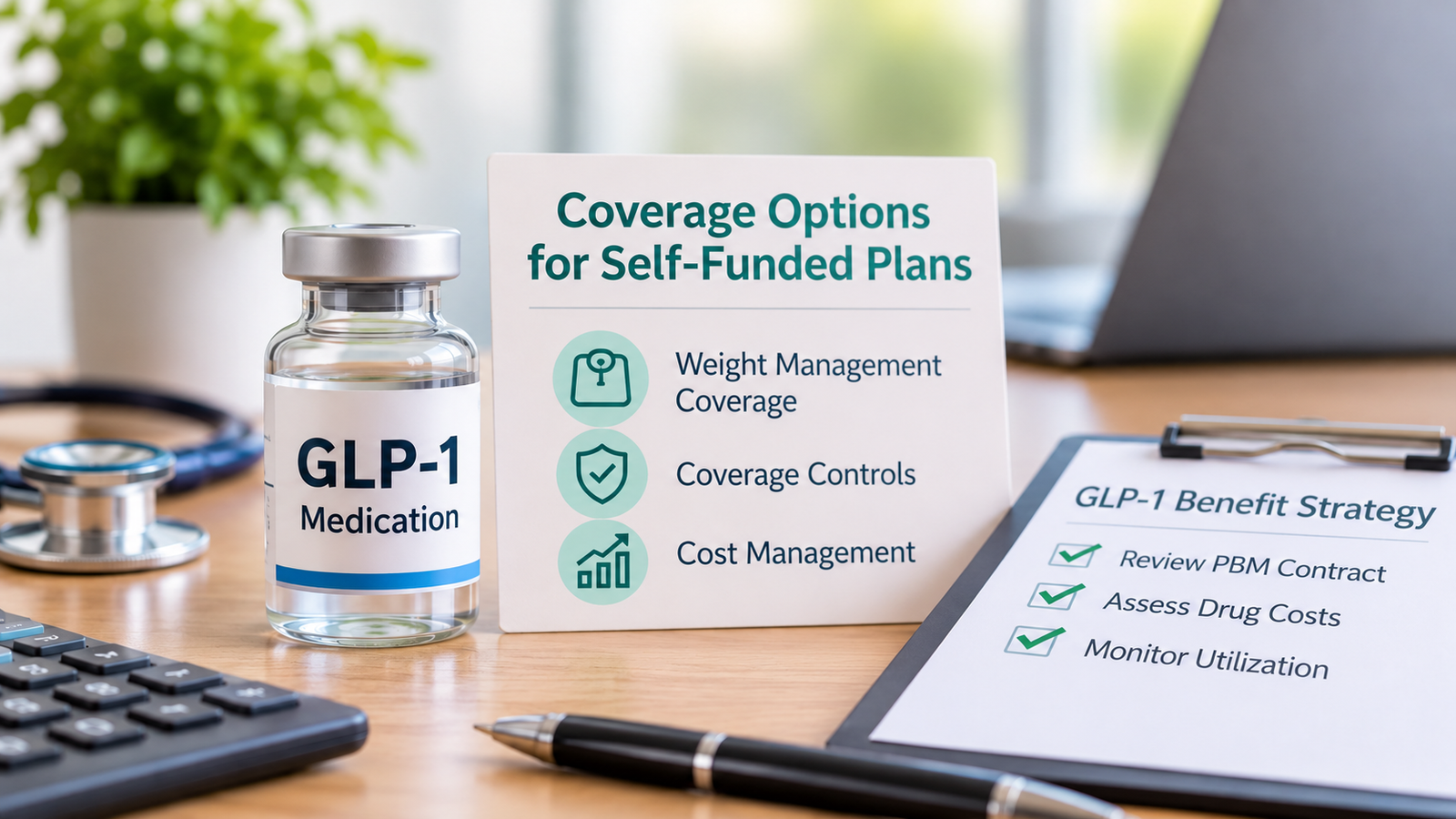
- GLP-1 coverage decisions affect both employee access to medication and a self-funded plan's pharmacy spending.
- Employers can choose to cover GLP-1 medications for diabetes, weight management, or specific approved indications.
- Prior authorization, eligibility requirements, and formulary management can help manage prescription use and costs.
- Reviewing PBM contracts, drug pricing, rebates, and stop-loss coverage helps employers understand their financial responsibilities.
GLP-1 medications are getting more attention from employers because of their growing role in prescription drug benefits. Many employees want to know whether their health plans cover these medications and what requirements they need to meet. For employers, the question is how to provide coverage while keeping pharmacy costs under control. This can be difficult for self-funded employers. They pay covered medical and prescription claims directly, subject to their plan terms and stop-loss coverage. A change in prescription use can affect the amount the plan spends. Understanding GLP-1 coverage self-funded plans is important when reviewing prescription benefits. Employers can also review how a self-funded PBM manages prescription benefits and related costs. Employers need to decide which medications to cover, what conditions to apply, and how to review the costs. These decisions are also part of GLP-1 benefit design.
Why Are Employers Rethinking GLP-1 Coverage?
GLP-1 coverage raises several questions for employers. They need to understand which medications employees may need, which treatment uses the plan will cover, and how much these prescriptions may add to pharmacy spending.
Here are some of the main reasons employers are reviewing their coverage:
- Growing Pharmacy Benefit Spending: GLP-1 prescriptions can add to a plan's pharmacy costs. Understanding pharmacy benefit management can help employers review how prescription benefits are priced and managed.
- Different Treatment Uses: Some GLP-1 medications are used to treat type 2 diabetes, while certain medications have approved indications for chronic weight management. Employers should check the approved use of each medication when setting coverage rules.
- Employer Cost Responsibility: Self-funded employers pay covered claims directly. If more employees use high-cost medications, the plan may face higher prescription expenses.
- Employee Access: Coverage rules determine which employees can receive these medications through their health plan. Employers should consider how coverage restrictions may affect members who need treatment.
For employers, GLP-1 coverage self-funded plans is not just a question of which drugs to include on the formulary. It also involves understanding the cost and coverage requirements attached to each medication.
What GLP-1 Coverage Models Can Self-Funded Plans Consider?
Employers can choose different approaches to GLP-1 coverage based on their plan requirements and benefit goals. They should review these options with their benefits advisors and PBM before making changes.
Common coverage approaches include:
- Diabetes-Only Coverage: A plan may cover eligible GLP-1 medications for approved diabetes-related uses but exclude coverage for other indications. The covered medications and requirements depend on the plan's formulary and coverage policy.
- Weight Management Coverage: Employers can decide whether to cover medications approved for chronic weight management. Before including this coverage, they should review expected utilization, prescription costs, and eligibility requirements.
- Separate Coverage Criteria: Plans can set different requirements for different medications and approved uses. This makes it clear which prescriptions qualify for coverage.
- Plan Exclusions and Limitations: Employers may choose to exclude certain medications or treatment uses or apply specific coverage restrictions. These rules should be clearly stated in the plan documents.
A clear GLP-1 benefit design should explain which medications are covered, which indications qualify, and what requirements employees must meet. Employers should also check relevant clinical guidance and regulatory requirements before changing their coverage policies.
Which Plan Controls Can Help Manage GLP-1 Spending?
After deciding which GLP-1 medications to cover, employers can review the controls used to manage prescriptions and plan spending. These requirements should be set with the PBM and based on appropriate clinical guidance.
Some common controls include:
- Prior Authorization: A prior authorization requirement means the prescription must meet specific criteria before the plan approves coverage. Employers should understand what clinical information is required and how the PBM reviews requests.
- Eligibility Requirements: Plans can set coverage requirements based on the medication's approved indication and applicable clinical criteria. Employees and providers should be able to understand these requirements before requesting coverage.
- Quantity Limits and Reauthorization: Plans may apply quantity limits or require periodic reviews for continued coverage where clinically appropriate. These rules should follow the medication's prescribing information and clinical guidance.
- Formulary Management: Employers should check which GLP-1 medications are included in the formulary and how the PBM prices them. Employers should review PBM pricing to understand the costs associated with their prescription benefit.
- Claims and Utilization Monitoring: Employers should regularly review GLP-1 claims, prescription volume, and spending reports. This helps them see how often these medications are being used and how much they contribute to the pharmacy benefit.
These controls are important parts of GLP-1 benefit design. However, employers should not focus on costs alone. Coverage rules should also consider clinical needs, employee access, and the terms of the health plan.
What Should Employers Review Before Updating Their GLP-1 Benefits?
Before changing GLP-1 coverage, employers should review their PBM contract, prescription costs, and plan requirements. A formulary change can affect more than which medications employees can access.
Here are five areas employers should check:
- PBM Contract Terms: Review how the PBM prices GLP-1 medications, processes claims, and reports prescription spending. Check the contract for details about drug pricing, administrative fees, and other charges.
- Rebate Arrangements: Find out whether manufacturer rebates apply to covered medications and how rebates received by the PBM are reported or credited to the plan. Review the contract to understand how these payments are handled.
- Stop-Loss Coverage: Check how the stop-loss policy treats high-cost prescription claims. Employers should confirm any exclusions, reimbursement conditions, and reporting requirements with their stop-loss carrier.
- Employee Communication: Tell employees about coverage rules, prior authorization requirements, and any changes before they take effect. Clear communication helps employees and providers understand what the plan covers.
- Ongoing Reporting: Review GLP-1 claims, utilization, drug pricing, and total spending regularly. These reports can help employers see whether their current coverage rules are working as expected.
Reviewing GLP-1 coverage self-funded plans regularly also helps employers keep track of changes in prescription use and PBM costs. They can use this information when deciding whether their coverage policies need to change.
Conclusion
GLP-1 coverage involves more than deciding whether to include certain medications in a health plan. Employers also need to consider approved treatment uses, coverage requirements, prescription costs, and employee access. For self-funded employers, regular reviews of formulary decisions, PBM pricing, claims, and rebate arrangements can help them understand where their pharmacy benefit spending goes. A practical GLP-1 benefit design should also make coverage rules clear to employees and providers.
Kanurra helps self-funded employers review PBM pricing, prescription claims, rebates, fees, and relevant contract terms. Book a PBM audit with Kanurra to review your current pharmacy benefit costs and PBM arrangement.
Frequently asked questions
Do self-funded health plans cover GLP-1 medications?
Yes. Coverage depends on the employer's plan rules, formulary, and approved treatment uses.
Can employers limit GLP-1 coverage to diabetes treatment?
Yes. Employers may choose to cover eligible medications for diabetes while excluding other uses, subject to applicable requirements.
What is prior authorization for GLP-1 medications?
It is a review process that checks whether a prescription meets the plan's coverage criteria.
How can employers manage GLP-1 prescription costs?
They can review formulary options, prior authorization rules, PBM pricing, and prescription claims.
Why should employers review their PBM contract for GLP-1 coverage?
It helps them understand medication pricing, rebates, fees, and how prescription claims are handled.
Written by
Kanurra